 Call Mike: 07721 366007



How To Maintain Your Hedges & Boundaries
Your choice of fencing can be far more important than many realise. Whether it’s for defining and protecting crop areas, or to contain animals, picking the correct type of farm fencing is critical. Making the right choice can be made considerably harder by the huge range of options on offer. However, when you narrow your search field down to just the best choices for each application the choices become a lot more manageable.
Everyone considering new fencing must ask themselves some important questions. How quickly do you need the fence erected? What is your budget? What is the purpose of the fence (keep animals in/out)? Does the look of the fence matter?
In the following blog, we look at some of the best options available to give you a head start selecting the right fence.
Equine Netting for Horses
While equine netting is aesthetically very similar to stock fencing, there are some important differences that make it more suitable for equestrian applications. The wire used for equine netting is carefully prepared to ensure it has no sharp edges. This helps to ensure your horses don’t scratch or cut themselves on the fence. Equine netting is also designed with smaller spaces between the wire. This is a deliberate design feature to stop your horses getting their hoofs trapped in the fence.
People using equine netting often add an additional rail above the netting to increase the safety and security provided. The netting is stretched between posts that are spaced approximately four meters apart. The high tensile steel used in our equine netting ensures your fence requires a minimal amount of maintenance and provides excellent durability.
Stock Fencing
Stock fencing is one of the most common types used for agricultural purposes. Because the wire strains tighter than mild steel it requires less maintenance. As with the equine netting, an additional wire can be added above for extra security. Unlike equine netting, with stock fencing, this is often barbed wire.
Typically, stock fencing will feature a strainer post every three to four meters. These will be supported by eight-foot strainers every 50 meters. A state-of-the-art post driver can drive the posts into the toughest of ground, usually to a depth of two feet for the smaller posts and four feet for the larger ones.
Post and Rail Fencing
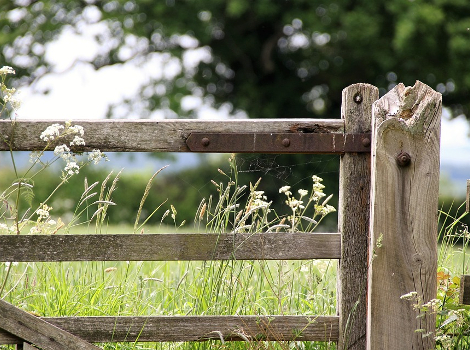
Post and rail fencing is a popular choice, and perhaps what most people associate with agricultural fencing. It’s both functional and aesthetically pleasing. The number of horizontal rails can vary between two and five depending on its intended purpose.
This type of fence will normally last for at least fifteen years but using high-quality posts that are pre-treated can double the life of your fence. The posts are spaced 1.8 meters apart and driven two feet into the ground. Post and rail fencing can also incorporate rabbit wire if required. The flexibility it provides also means it’s a good solution for any size run and is very competitively priced.
Featheredge Fencing
Featheredge fencing has fewer applications and is usually used in areas that require privacy or domestic installations. The posts can stand six or seven feet high and are overlapped by the cladding that makes up the body of the fence. Opting for a decent quality timber installed by professionals will mean this option will last approximately 25-years.
Related posts
